


5 Ways to Talk to Your Roommate About Unpaid Bills (Without Yelling)
Introduction
We've all been there. The Wi-Fi bill was due three days ago, the electric bill is surprisingly high this month, and your roommate's Venmo account has been completely silent.
Bringing up money with someone you live with is arguably one of the most awkward conversations you can have. Your home is supposed to be your safe space, and the last thing you want is thick, uncomfortable tension every time you walk into the kitchen. But letting resentment build up while you quietly cover their half of the rent isn't a sustainable solution, either.
So, how do you get what you're owed without starting World War III over the breakfast table? Here are five ways to approach the unpaid bill conversation calmly, fairly, and without raising your voice.
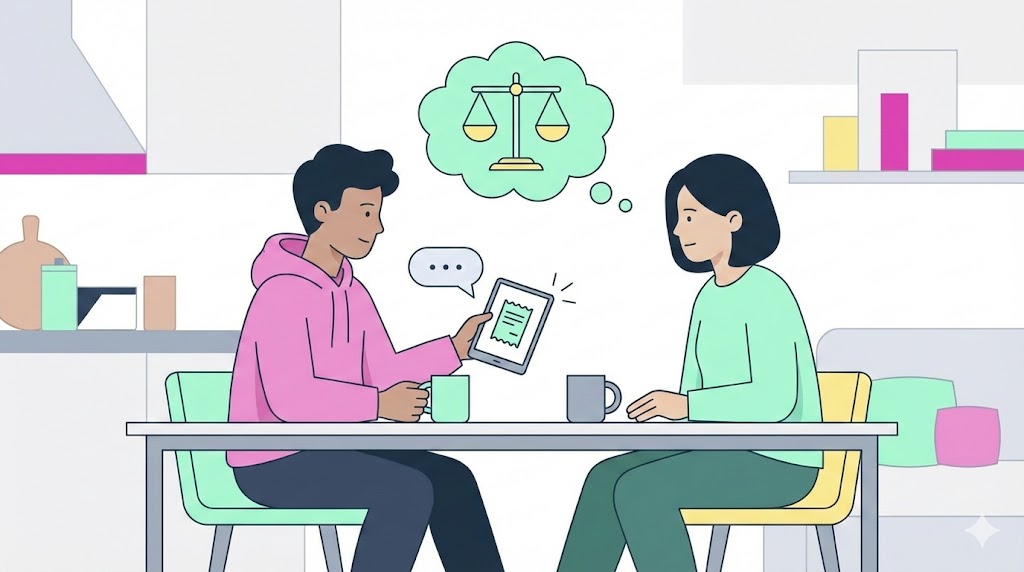
1. Assume They Just Forgot (Because They Probably Did)
Before you draft a fiery text message, take a deep breath. Life gets busy, and people genuinely forget things. Start by giving them the benefit of the doubt.
What to say: "Hey! Just doing my end-of-month budget and realized I haven't seen the money for the internet bill yet. Let me know when you have a chance to send it over!"
This removes the accusation. It frames the situation as a simple oversight rather than an intentional slight.
2. Avoid the "Ambush"
Don't bring up the missing rent money right as they are rushing out the door for work, or when they just got home looking exhausted. Timing is everything. Ambushing someone puts them immediately on the defensive.
Instead, ask for a quick sync: "Hey, do you have five minutes to chat about apartment stuff later tonight?" This gives them a heads-up and prevents the conversation from feeling like an attack.
3. Use "I" Statements Instead of "You" Accusations
When emotions run high, it's easy to say, "You never pay the bills on time and it's ruining my credit." Even if it feels true, it guarantees an argument.
Shift your language to focus on how the situation impacts you.
Try this: "I get really stressed about late fees when the utility bills aren't paid by the 1st." This keeps the focus on the shared problem (the bill) rather than attacking their character.
"A good compromise is one where both parties leave feeling heard, not just settled." – SettleIt Mediation Team
4. Suggest a Clear System for the Future
Sometimes, unpaid bills are a symptom of a broken system. If you are always the one paying the landlord and then awkwardly hunting down your roommate for cash, it's time to change the workflow.
Suggest using a shared expense app, setting up automatic calendar reminders, or physically pinning the bills to the fridge with the due dates highlighted. Make it a "we" project to fix the system, rather than a "you" problem.
5. When Talking Fails, Bring in a Neutral AI
Let's say you've tried being nice. You've left sticky notes. You've sent the polite reminder texts. But the conversation keeps devolving into an argument about who bought groceries last or who took out the trash. The original issue—the unpaid bill—gets lost in the emotion.
That's exactly why we built SettleIt.
Instead of threatening to break the lease or taking them to small claims court, you can use SettleIt to find a fair middle ground. You just type out your side of the story, and our system sends your roommate a polite, automated text inviting them to share theirs. No yelling, no face-to-face showdowns. Our neutral AI looks at the facts and proposes a fair compromise that you both can agree on in minutes.
The Bottom Line
Conflict is a totally normal part of living with other people. It doesn't mean you're bad roommates; it just means you need to communicate. Keep your cool, stick to the facts, and remember that protecting your peace of mind (and your friendship) is just as important as protecting your wallet.


Leave A Reply
Login to post your comment or signup if you dont have any account